Wednesday, January 17, 2024

Frecciarossa to Rome

January 16, 2024

The ferry arrived on time at Bari and we were one of the first foot passengers off the boat (1). An easy walk brought us to the Porto Vecchia (old port) area of Bari.  We were in of the Puglia region of Italy, in the southwest of the country, above the heel on the Italian boot. 

The city is known for its orichietti pasta. While the raw pasta was readily available, we were unsuccessful in finding a place that would serve it to as lunch before our train departed at 12:46. The Frecciarossa (Red Arrow) high-speed train raced across Italy at up to 180 MPH, arriving in Rome in time for dinner.

(1) I have landed by ferry here before; the lines to clear immigration can be long, so getting off the boat quickly is advantageous. 

Sunrise on the Adriatic off Bari
We beat the other ferry in; shorter line at Italian immigration
Pilot hopping aboard
Bari's landfall light
Porta Vecchia, Bari
At The Cathedral of Bari
Teatro Petruzzelli, Bari's Opera House


Tuesday, January 16, 2024

The House of Leaves & a ferry across the Adriatic

January 16, 2024

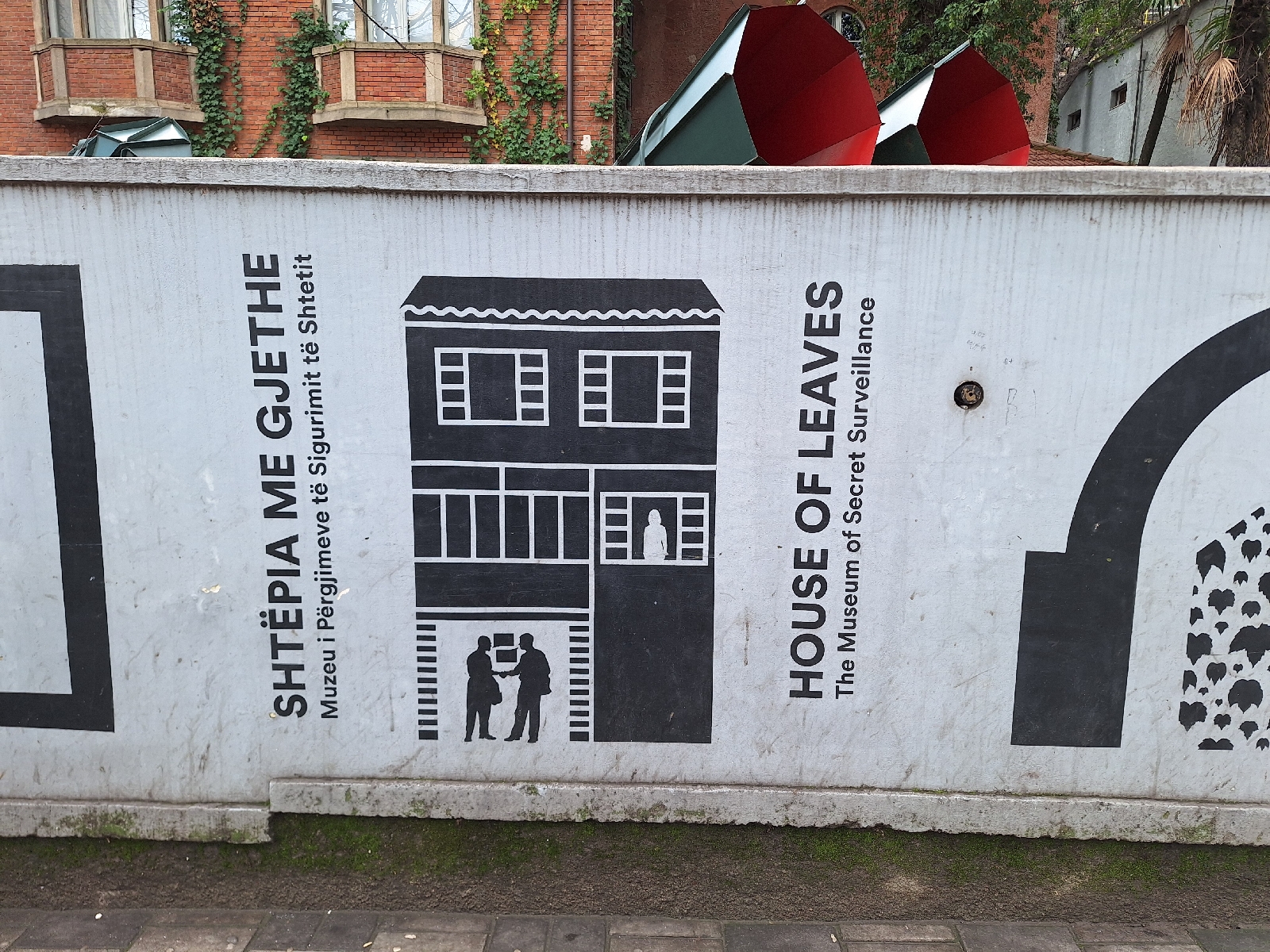
A flight from Venice (1) to Tirana, Albania this morning. A museum in Tirana, Albania called The "House of Leaves" details surveillance activities during the Communist era. The building was originally a medical clinic, but was taken over by the the Segurimi (secret police) due to its location in central Tirana near most government offices and the telephone exchange. The museum provides good context to understand 20th century Albanian history and the extensive paranoia of the "only true Communist country in the world" (after the rejection of Stalinism in Europe (mid 1950s) and the death of China's Mao in 1976).

Across the street is the post-communism Orthodox Cathedral; the original was razed in the 1960s because all Albanians were athiests during communism, whether they wanted to be or not.

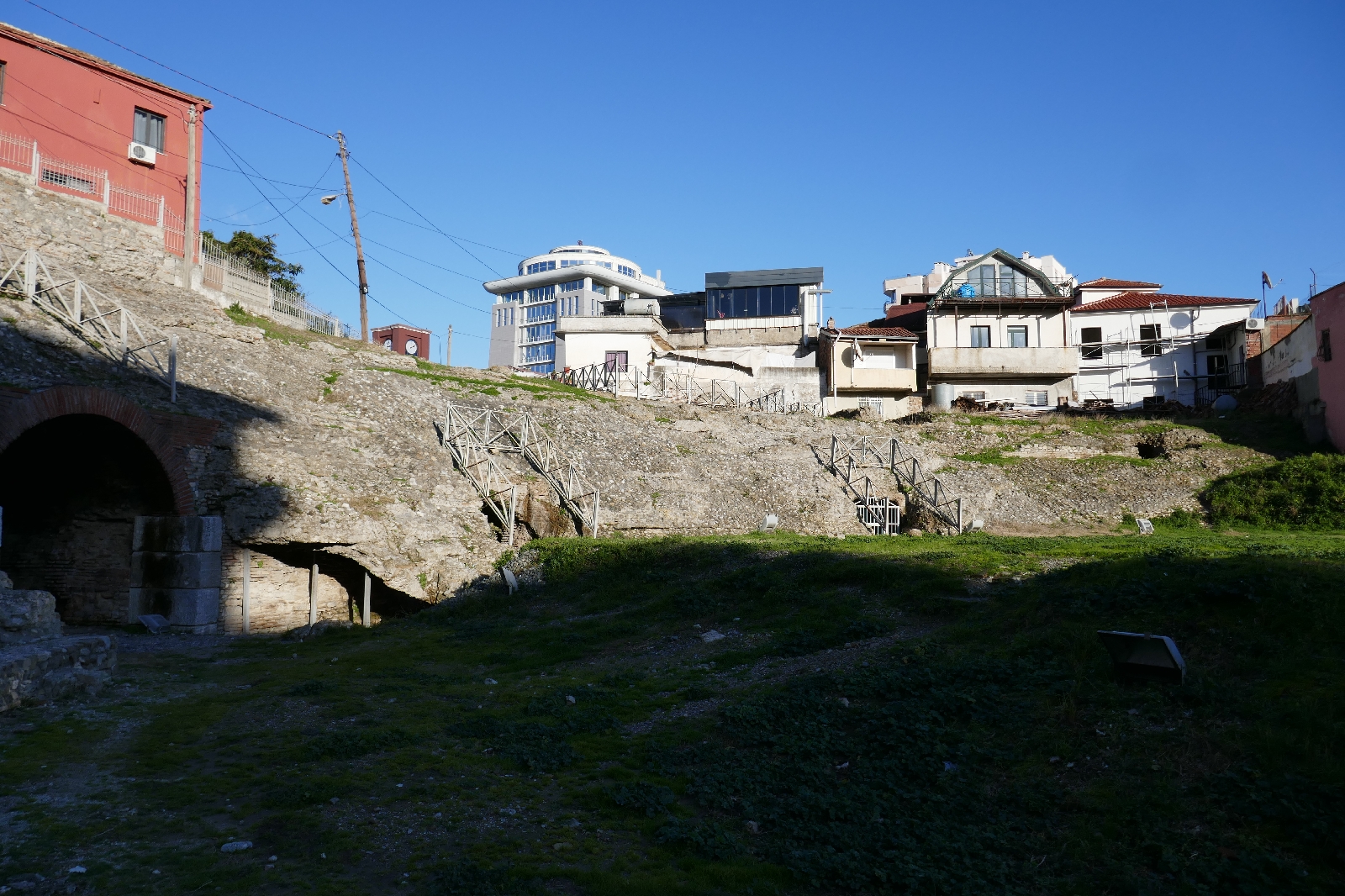
The coastal city of Durres features a Roman Amphitheater (c. 100 C. E.), and city walls originally from the Byzantine era, with the foundations of the walls dating to post-earthquake 1273 C.E. The current walls date from the period of control by the Republic of Venice (1394 to 1501). 

The "Venetian Tower" is a largely modern structure, with extensive rebuilding after a 2019 earthquake. The small door opened when we pushed on it; we were invited to climb the tower to we enjoy the view. While the venue officially closed at 4:00, the host invited us to stay for a virtual reality experience featuring a Roman era view of the town and traveler Edward Lear's painted view of the city from 1848.

As night fell, we headed to the ferry terminal for our overnight boat across the Adriatic back to Italy at the port city of Bari.

(1) Not the real Venice Airport, the flight was from Treviso, where the discount carriers fly. An easy 1/2 train ride from Venice Santa Lucia station to Treviso.

The House of Leaves Surveillance Museum, Tirana
Orthodox Cathedral (built in 2001)
The Roman Amphitheater at Durrës
Early Christian mosaics at Amphitheater
Cat on the prowl at Amphitheater
The Byzantine/Venetian Walls of Durrës
Edward Lear's painting of the walls of Durres, 1848. Part of the VR experience at the Venetian Tower.
The Venetian Tower, restored after a 2019 earthquake
Sunset on the Adriatic
Boarding the ferry


Monday, January 15, 2024

Rittner Bahn/Ferrovia del Renon

January 15, 2024

Venice weather today was cloudy, while in the Dolomite mountains, clear weather was forecast. We hopped the train towards Bolzano/Bozen in South Tyrol. This region was part of the Austro-Hungarian empire until the first World War (1) and the majority of the population today is still German-speaking (2).

At Bolzano/Bozen, a cable car ascends the steep bluff to the Rittner/Renon plateau at Soprabolzano/Oberbolzan (3). An old-time tram heads east from here through the snow-covered ground to Callalbo/Klobenstein. As the tram approached the town, speed skaters were training at a track visible from the train. A café in the station at Klobenstein serves Apple Streudel & Sachertorte, as people chattered away in German. The ride back was in a more modern tram car.

My daughter had asked the lead singer of a Dutch metal band where to visit in Italy, and the singer said Lake Garda. The lake was sort of on the way back to Venice. We stopped for a quick visit at the very quiet Peschiera de Garda, which appears to be a summer resort area.

(1) Italy was neutral in the first World War until the secret Treaty of London promised Italy the region should they join the war on the British/French side. Tyrol is in Austria, while North Tyrol is in Germany. 

(2) At Trento, the first station in South Tyrol, signs and announcements in Italian and German began. Most towns in the region have both Italian and German place names.

(3) Both town names mean above or over Bolzano.
On the cable car
Rittner Bahn
Views of the Dolomites
Back at Oberbozen. Note distinctive church steeple in the background.
Bilingual Italian/German signs at Bolzano
View from the train north of Verona
At Lago di Garda


Sunday, January 14, 2024

Fra Mauro's Mappa Mundi

January 13 to 14, 2024

My daughter has been studying Italian, but had not been to Italy. A wicked cheap flight brought us to Venice, arriving at dusk.

The next morning, we set out the Correr Museum, where I hoped to find Fra Mauro's Mappimundi. The monk lived on an island in the Venice Lagoon at the Monastery St Michele. Consulting texts from antiquity and asking visitors to Venice (1) about their travels, Mauro assembled a remarkably accurate map for the early 1450s (2). The map is oriented with south at the top, as the convention of north at the top had not yet solidified.

Down a corridor, at a dead end in the museum, we found the map. It was fascinating checking out various parts of the map. An interactive display nearby had videos and the capacity to enlarge parts of the map. I totally geeked out for about an hour, while my daughter waited (patiently) for me to tire of the details. At the gift shop, I was excited to buy a reproduction of the map. "Everybody asks for that, but we don't sell them," came the reply.

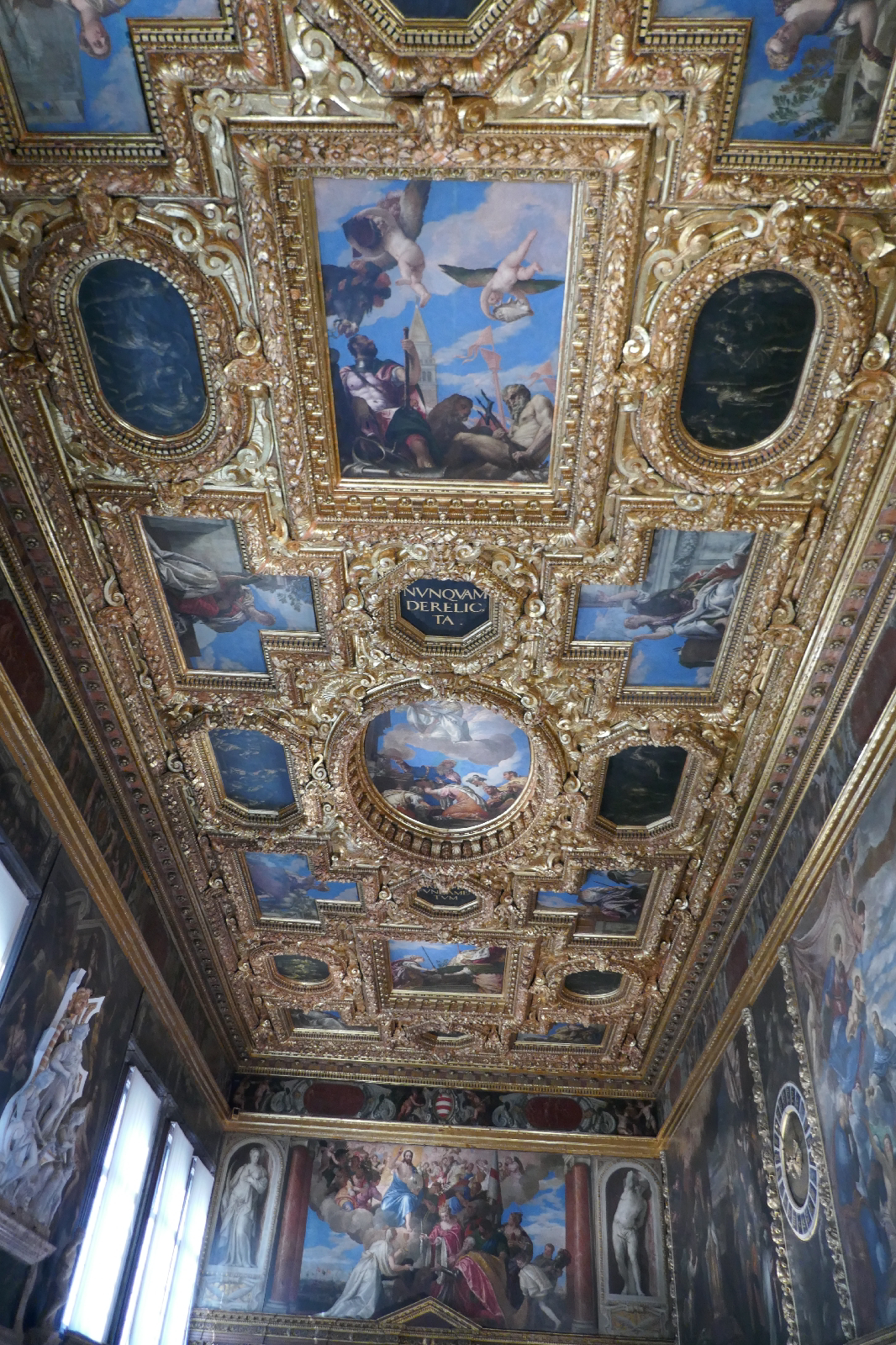
We also visited the Doge's palace and St. Mark's Basilica. Unlike in the summer, you can just show and go at this quiet time of year.

(1) Venice was the center of trade between the East and Europe through the end of the 1400s. As such, traders from distant ports (including Arab traders who had visited the far east) were frequent visitors to Venice.

(2) Given the description on the map, Mauro made the map before the Fall of Constantinople in May 1453 (a).

(a) Called by the Ottomans "The capture of Stamboul."

Sun (& crescent moon) set, Venice Airport Vaparetto dock 
Grand Canal from a vaparetto
Rialto Bridge without a mob of people. View from a vaparetto.
Walking in Venice
Detail, Iberian Penninsula & British Iles
Jerusalem is not the center, bit slightly west of center
The Garden of Eden, in the margins, not on the map
The Mappamundi
Detail of the Mediterranean Sea
At the Doge's Palace
End of an era: The last Doge leaves the palace as Napoleon's troops advance in 1797, ending 1,000 years of the Serrenisimo (most serene) Venetian Republic. Artist's rendering from the late 1800s.
Mosaic at St Mark's Basilica
Dusk on the Grand Canal at Rialto